Continue on LiberePassioni
Related pages from the personal LiberePassioni journey.
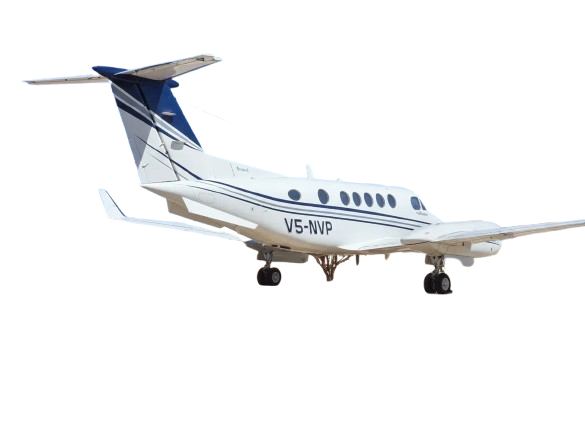
The Piper slowly crosses the Namibian desert in golden light, while dunes, coast and shipwrecks compose from above one of the most evocative landscapes of the entire journey.
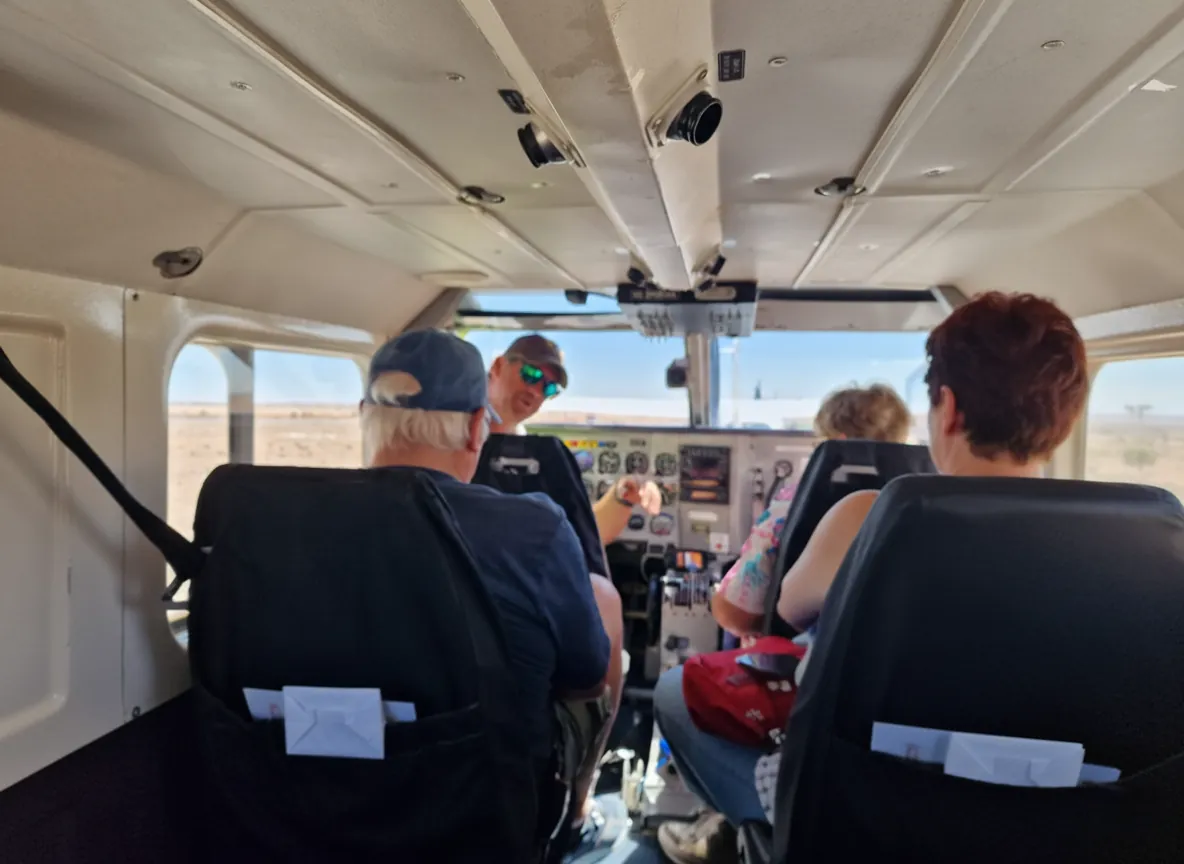
A shot that immediately pulls you into the atmosphere of the flight: compact space, engines ready, and that typical feeling of small, intense, almost handcrafted departures.
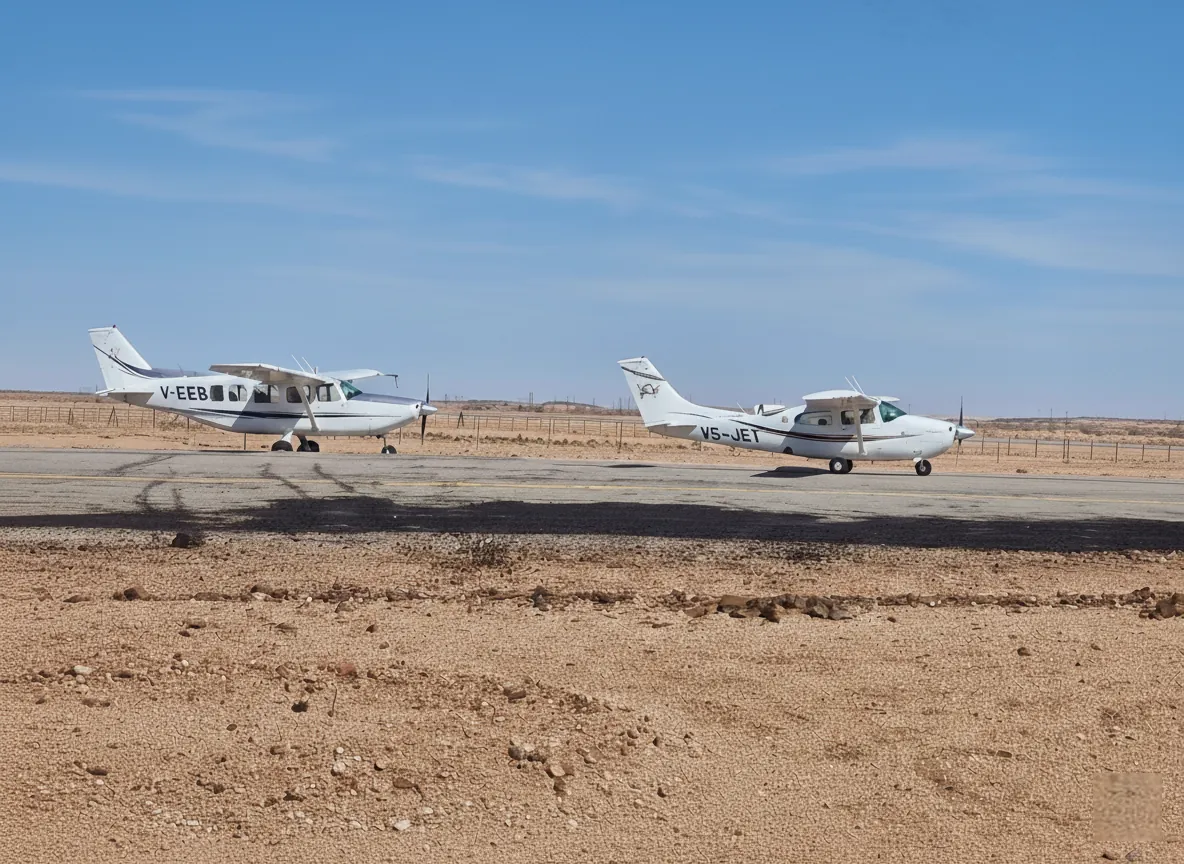
The aircraft waiting on Namibian ground introduces the character of the experience well: not only landscape, but real adventure, with the desert beginning even before the wheels start moving.
This image works as a narrative opening: the excursion begins on the runway, among dry light, sand, propellers and the wait for take-off.
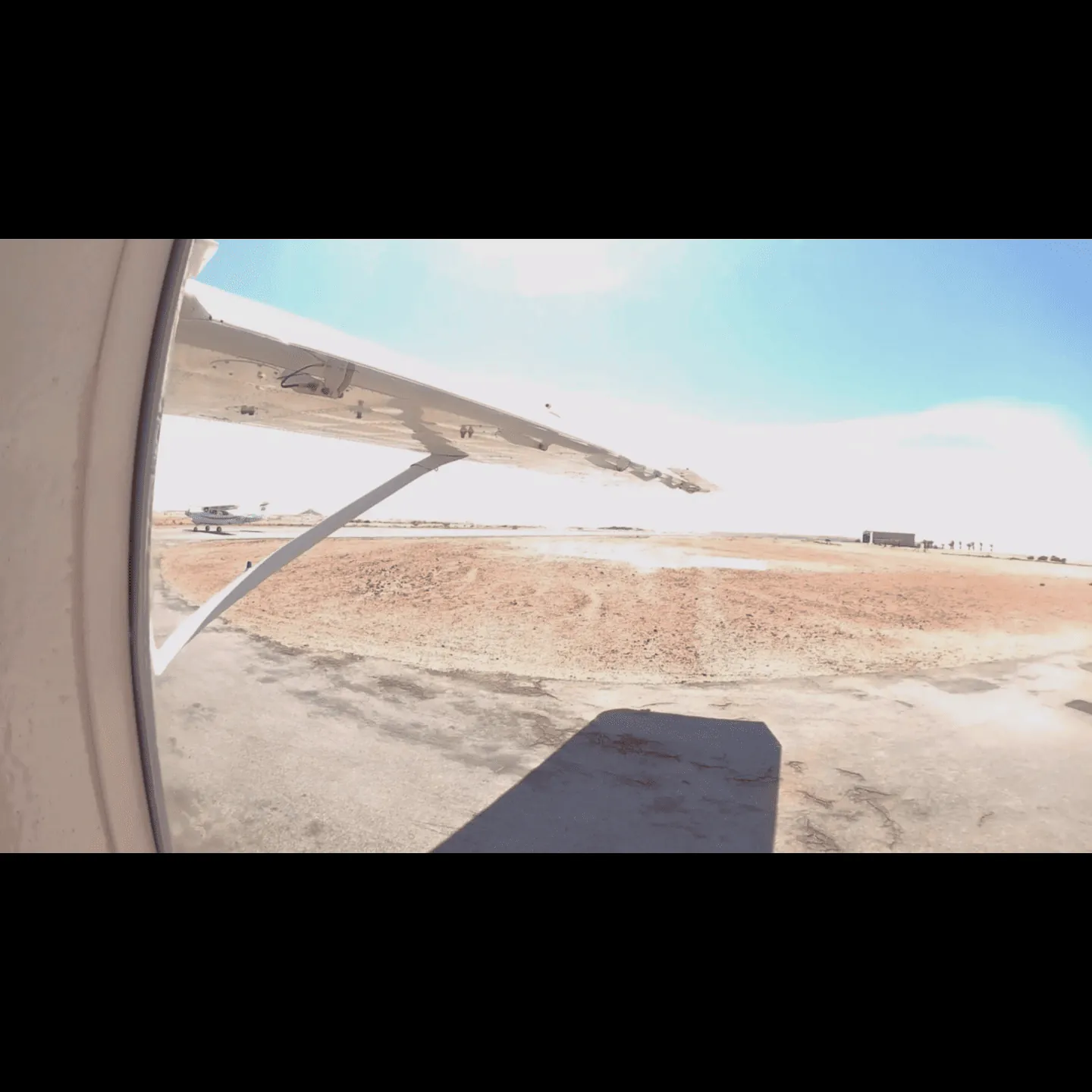
The threshold moment: the landscape is no longer only in front of you, but is about to become a panoramic sequence seen from above.
The Kuiseb is one of the great natural lines of the Namib: an ephemeral river that, when flowing, brings life along a green corridor in the desert. Seen from above, it is striking precisely because of this contrast: a sea of dunes on one side, harder and rockier surfaces on the other.
The Kuiseb Canyon adds drama to the route: erosion has carved over time a scenic fracture that, from the aircraft, appears like a real geological scar.
Tsondabvlei is one of those places that gives the feeling of the quieter and more remote Namibia. It is a dry depression where the Tsondab system ends.
Sossusvlei is one of the absolute symbols of Namibia and from above it becomes even more impressive. The white of the clay pan, the red of the dunes and the geometry of the desert create an almost unreal composition.
Here the desert preserves traces of a past made of diamonds, controlled access, industrial settlements and structures later consumed by wind, salt and sand.
The Eduard Bohlen is the wreck that more than any other captures the poetic absurdity of the Skeleton Coast: a ship stranded in 1909 and now far from the shoreline because of the constant advance of the sands.
The Shawnee wreck introduces a different dimension: more exposed to direct dialogue with the shoreline and the Atlantic.
Sandwich Harbour is one of the most spectacular points of the entire route. Here the Namib dunes descend all the way to the sea in one of the most scenic combinations in Namibia.
After the wild dimension of dunes and wrecks, Walvis Bay introduces a more urban and strategic presence. The port is the country’s main commercial hub.
Swakopmund perfectly closes the story of the flight: a town suspended between desert and ocean, with a strong German colonial imprint.
Because here you do not see only one landscape, but the encounter of very different and very close natural systems. In just a few minutes you move from the Atlantic coast to the Namib dune belt, from ephemeral riverbeds such as the Kuiseb to inner clay pans, and on to coastal wetlands such as Sandwich Harbour and areas historically marked by wrecks and diamond activity.
The first issue is visibility: the Namibian coast is famous for the fog generated by the cold Benguela Current. The second is the variability of the desert environment, where wind, sand and extreme remoteness require serious planning. The third is density altitude, important for light aircraft performance.
Because here the great Namib dunes literally reach the sea, creating a powerful line of contact between sand and the Atlantic. It is not just about photogenic scenery: Sandwich Harbour is also an internationally important wetland recognised by Ramsar.
Because they show not only extreme nature, but also the human dimension of the Namibian coast. Walvis Bay is the country’s main commercial port and Swakopmund tells the story of urban settlement, German colonial memory and the continuous relationship with fog, ocean and desert.
"C'è un tempo per lavorare e un tempo per vivere"
Related pages from the personal LiberePassioni journey.